
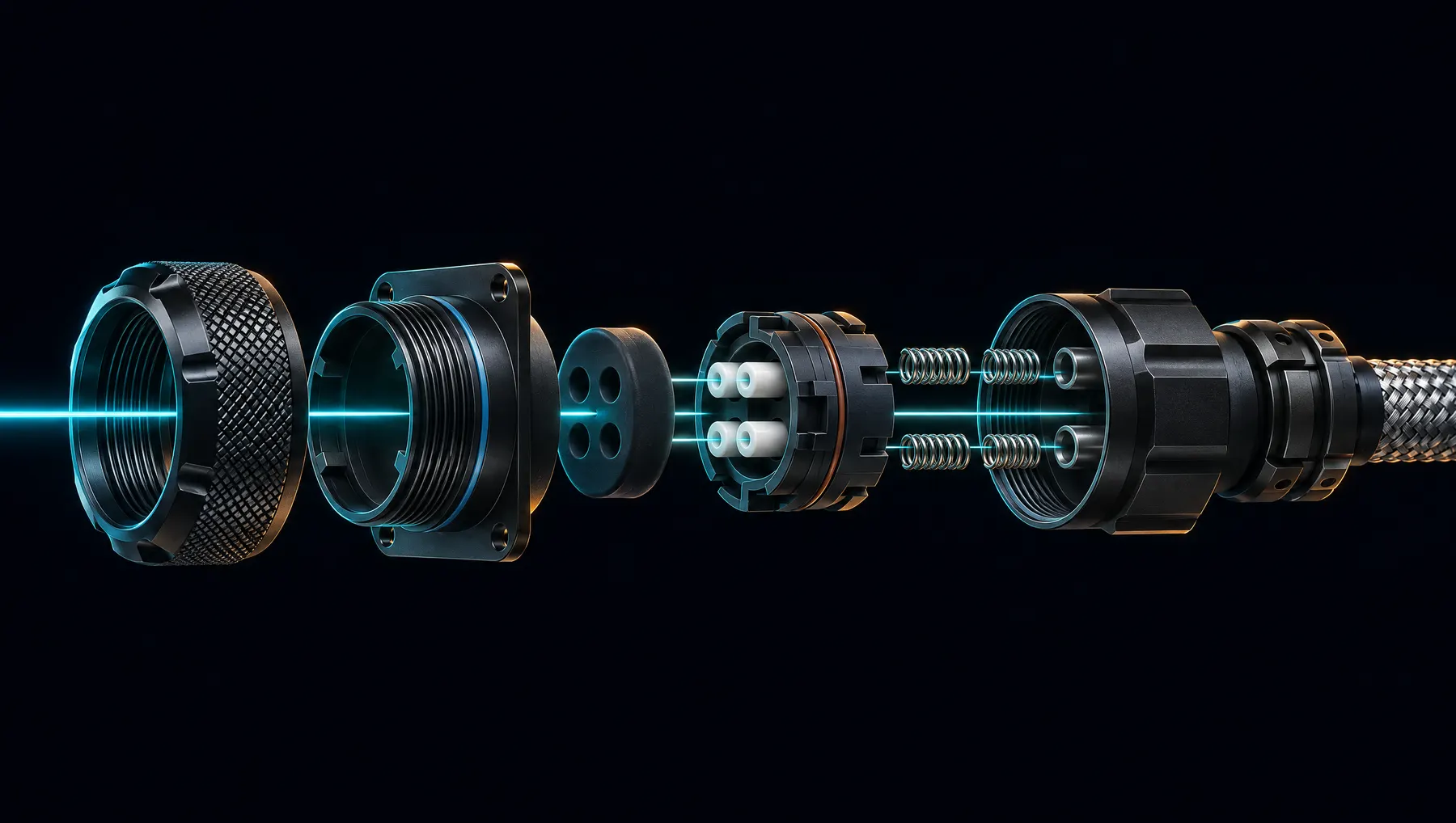
PCF 200/230 µm HFBR Connector Assemblies
Longer, tougher control links than plastic fiber, on the same connector.
PCF HFBR assemblies use 200/230 µm plastic-clad silica fiber with HFBR-style connectors to carry control and fieldbus signals over longer distances than plastic fiber, typically in wind turbine converters, drives and industrial automation. Telespace builds them to length in simplex or duplex and tests every cord.
- Fiber
- PCF 200/230 µm
- Connector
- HFBR-style
- Layout
- Simplex or duplex
- Wavelength
- Typically 650 or 820 nm
- Turbine class
- Used in 1.5 to 3.0 MW turbines
- Length
- Cut to order
Pan-India dispatch from our Mumbai workshop by courier or your nominated transporter.
What it is
A PCF HFBR assembly is a fiber optic cord built on 200/230 µm plastic-clad silica, with HFBR-style connectors on each end. PCF, also called hard-clad silica, puts a glass core inside a tough polymer cladding. It keeps much of the easy handling of plastic fiber while cutting attenuation dramatically, so the same connector style can serve runs of hundreds of metres instead of tens.
That is why PCF is common in wind turbines. Control signals have to travel from the nacelle through the tower to the converter, past generators, busbars and switching power electronics. An optical link carries them with no electrical path and no noise pick-up.
How we build it
The cable is cut to length, the jacket and buffer are stripped, and the fiber is terminated into the HFBR-style plug. The end-face is cleaved or polished and inspected, and the cord is checked for optical throughput before it is labelled. Duplex assemblies are marked for transmit and receive.
Where it is used
- Wind turbine converters, pitch systems and tower control links
- Industrial drives and automation cabinets
- PROFIBUS and other fieldbus segments with optical transceivers
- Links between field sensors and control rooms
- Transport systems such as airport baggage handling and railway sensing
Configuring your order
Please tell us:
- Length and quantity per length
- Simplex or duplex
- Connector at each end, or the transceiver part number on the equipment
- Jacket and whether armour is needed for the route
- Turbine or equipment model, if this is a replacement
- Labelling for each position
For SMA-terminated PCF, see our PCF SMA assemblies. If you are unsure whether your equipment uses HFBR-style or V-pin plugs, send a photo of the port and the existing cable end. The two families look similar at a glance but do not intermate, and we will confirm the right part before building.
Specifications
Technical specifications
| Fiber | Plastic-clad (hard-clad) silica, 200 µm core, 230 µm cladding |
|---|---|
| Operating wavelength | Typically 650 nm or 820 nm, matched to the transceiver |
| Link length | Typically hundreds of metres; depends on transceiver and data rate |
| Type | HFBR-style (Versatile Link type) simplex or duplex plugs |
|---|
| Cable | Simplex or duplex, PVC, PE or LSZH jacket, optional armour |
|---|
| Fieldbus links | Optical links for PROFIBUS, CC-Link, DeviceNet and KNX equipment fitted with matching transceivers |
|---|
| Operating temperature | Typically -40 to +85 °C depending on jacket; confirm per build |
|---|
Values are typical. Every assembly is built to order, so final figures are confirmed on your quote and test report.
Configure
Build it to your link
- 01
Simplex cords
Single 200/230 µm fiber with HFBR-style plug each end.
- 02
Duplex cords
Paired fibers for send and receive.
- 03
Armoured cords
Protected construction for routes through tower sections and cable trays.
What you get
- Glass core carries the signal much further than 1 mm plastic fiber
- Hard cladding tolerates tight bends and handling during installation
- Full electrical isolation through converter and switchgear cabinets
- HFBR-style plugs matched to the transceivers on your control boards
- Every cord inspected and checked for optical throughput
Applications
Where it is used
- Wind turbine converter and pitch control links
- Drive systems from major automation vendors
- PROFIBUS and other fieldbus optical segments
- Sensor-to-control-room links in plants
- Railway, airport baggage and transport control systems
Industries served
Standards
FAQ
Questions buyers ask
What is the difference between PCF and POF?
POF uses a 1 mm plastic core and suits runs of a few tens of metres. PCF uses a 200 µm glass core with a hard polymer cladding, so it has far lower attenuation and reaches much further while still being easy to terminate.
Which wind turbines use these cables?
PCF HFBR links are common inside the converters and control cabinets of 1.5 MW to 3.0 MW class turbines. Send us the turbine or converter model and the existing cable markings and we will match the assembly.
Is this an HFBR or a V-pin connector?
They are different connector families. This page covers HFBR-style plugs. If your equipment uses V-pin plugs, tell us and we will confirm what we can supply.
Can I get duplex cords with colour-coded ends?
Yes. Duplex cords are marked so transmit and receive can be told apart, and we can colour-code where stock allows.
Related products
All pof and pcf links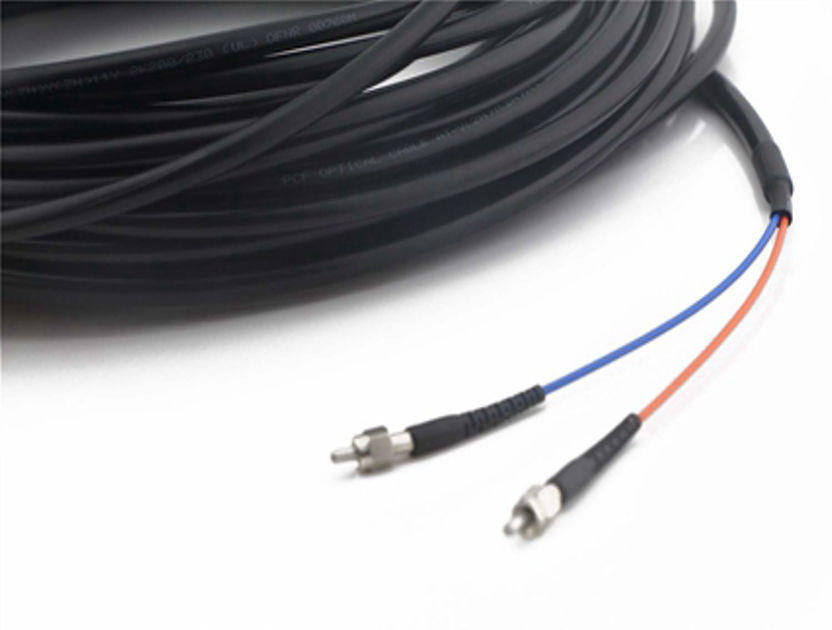 PCF
PCF 200/230 µm SMA Connector Assemblies
Screw-locking PCF links that stay put under vibration.
- FiberPCF 200/230 µm
- ConnectorSMA 905, threaded
- LayoutDuplex or simplex
 POF
POF HFBR Connector Assemblies
Short, isolated optical links for drives, PLCs and grid equipment.
- Fiber1 mm POF
- ConnectorHFBR-style, simplex or duplex
- LatchLatching or non-latching
 POF
POF TOCP-Style Connector Assemblies
Noise-immune control links for drives, inverters and automation panels.
- Fiber1 mm POF or 200/230 µm PCF
- PlugsF05 or F07 type
- LayoutSimplex or duplex
Fiber Harting-Compatible LC Industrial Fiber Connector
LC fiber inside a sealed industrial housing for turbines, panels and plant.
- HousingHan-type rectangular
- Fiber connectorLC
- FiberSM or MM
Request a quote
Quote for PCF 200/230 µm HFBR Connector Assemblies
Send the length, connectors each end and quantity, or attach a drawing. An engineer replies within one business day with options and a price.
Pan-India dispatch from our Mumbai workshop by courier or your nominated transporter.